
The half of the job that only gets attention once something has gone wrong. Three seats watch what you already own, on their own cadence, and tell you the thing worth a conversation.
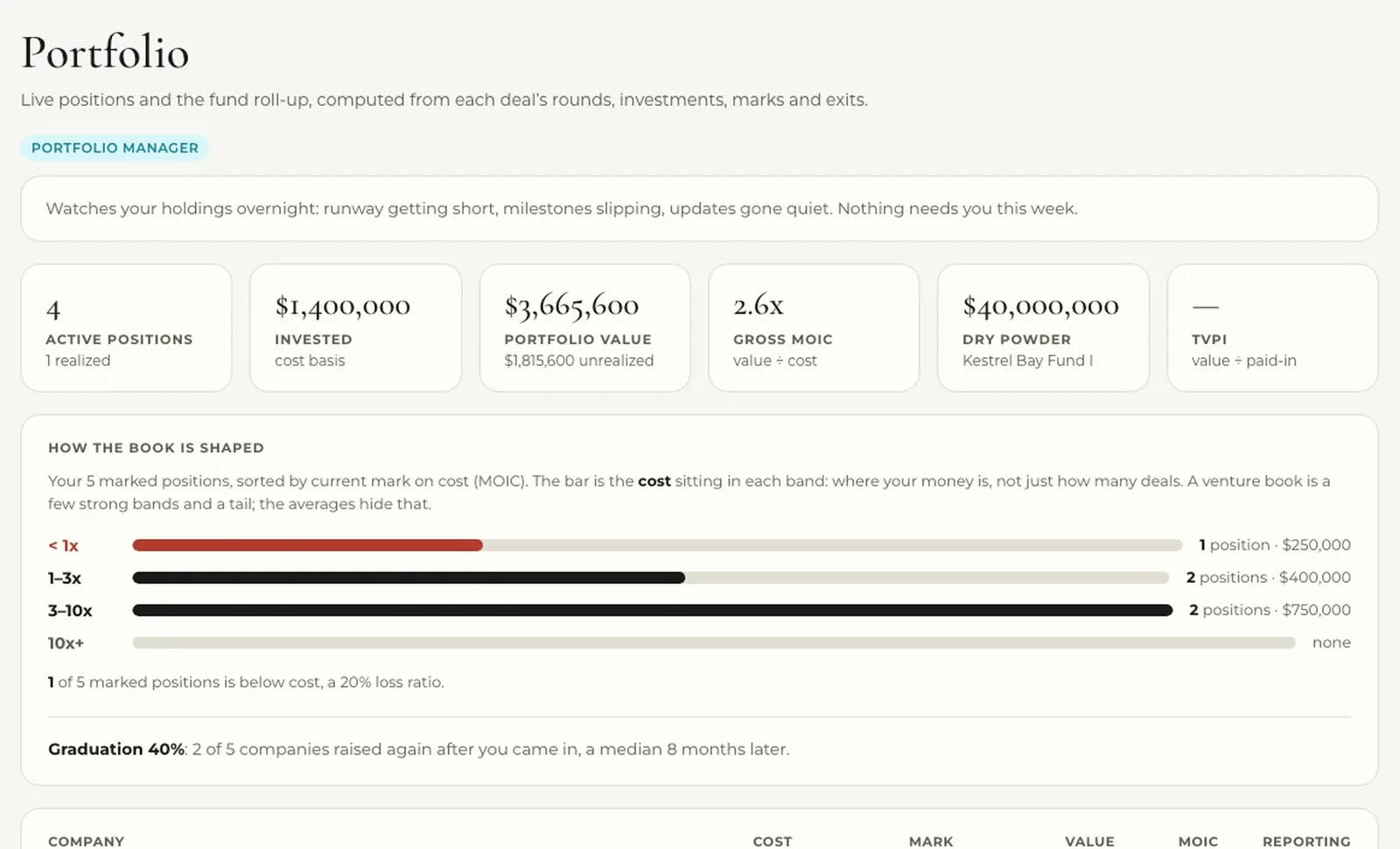
Notices who went quiet.
Surfaces who in your network can help a founder. Drafts the intro.
Spots the liquidity window before it closes.
A portfolio company that stops reporting is the earliest signal there is, and it is the one a busy partner misses because nothing arrives to remind them. The Portfolio Manager notices the absence rather than the update.
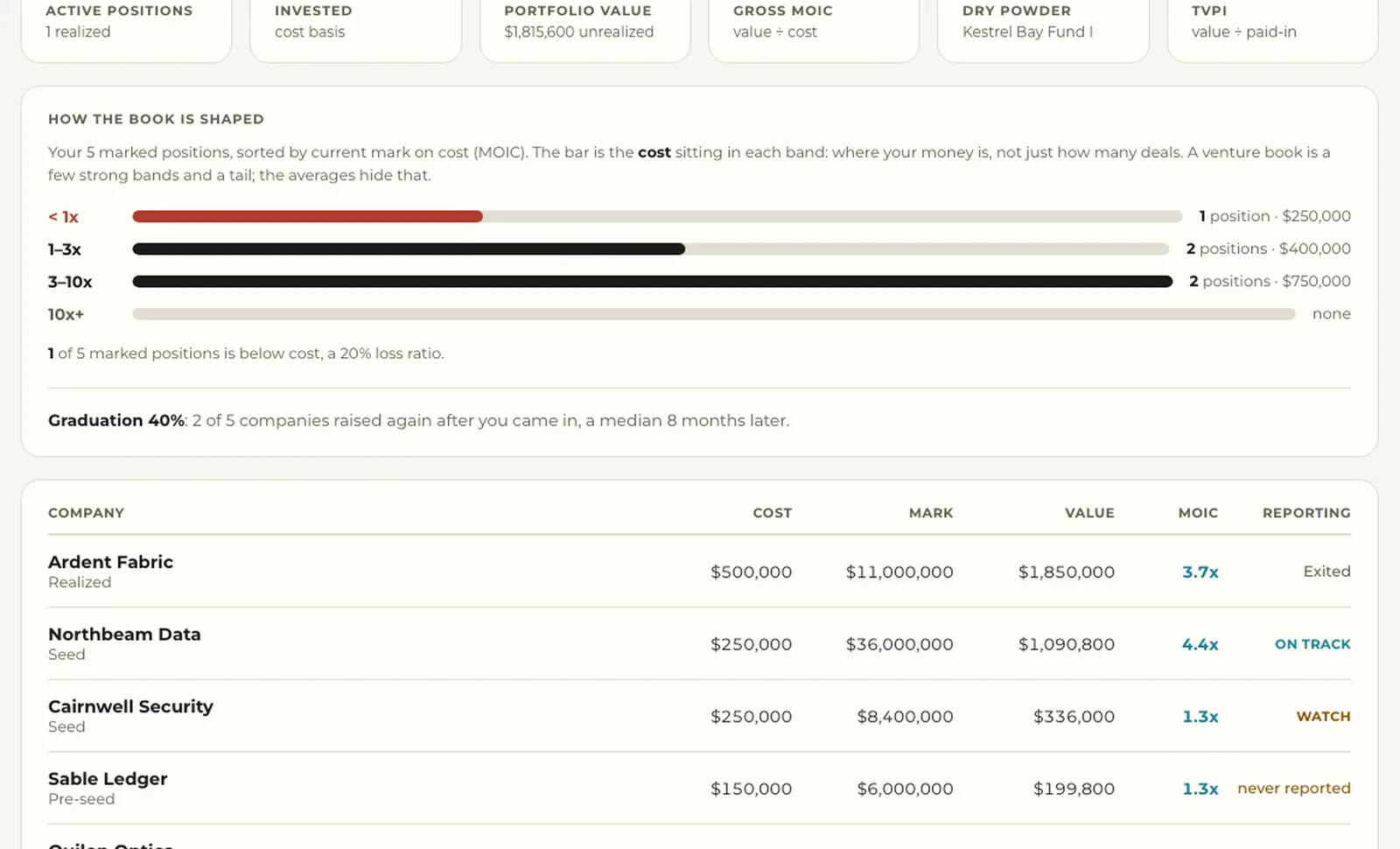
When founders do report, the weekly check-in asks how the company is really doing, and that answer sits in the portfolio view beside the figures. A company drifting off track shows up in what its founder says, not only in the metrics.
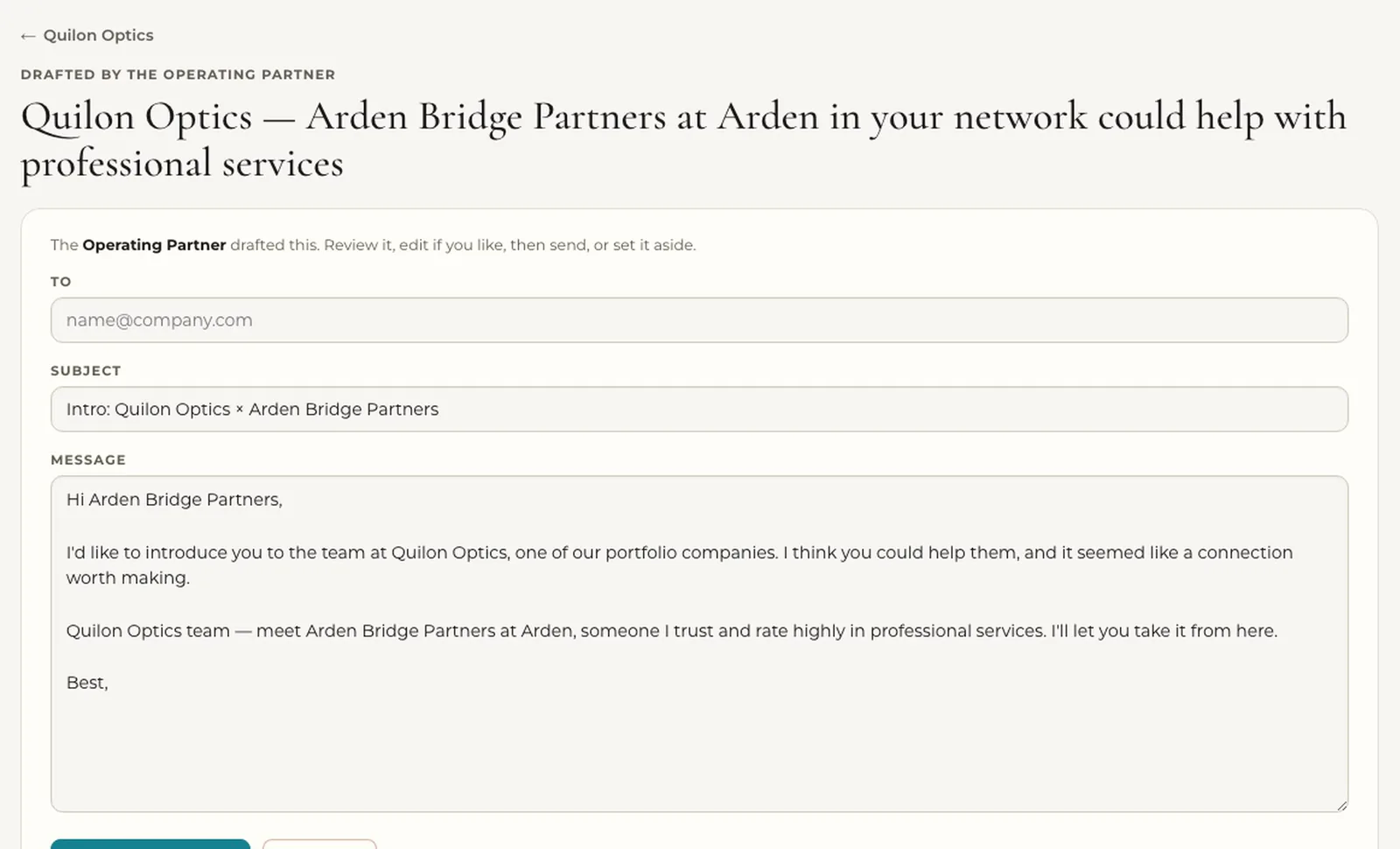
A portfolio company's problem is usually one introduction away from somebody you already know. The Operating Partner reads what a company needs, searches your relationships for the person who can help, and drafts the introduction.
You send it or you do not. The seat surfaces and drafts; the relationship is yours and so is the decision to spend it.
Liquidity windows open and shut without announcing themselves, and a holding nobody is watching is a holding you sell late. The Secondaries Associate follows what is moving around each position and raises the moment worth a conversation.
It never acts on a holding. It tells you.
When a position does exit, it is valued from what actually happened: the proceeds of the sale, listing or write-off, and only the stake still held after a partial sale. The fund multiple you show investors reads a write-off as a loss, not as a stale paper mark.
Liquidity windows open and shut without announcing themselves, and a holding nobody is watching is a holding you sell late.
The window before it closes
New deals are urgent and the portfolio is not. A company that is quietly drifting produces no email, no meeting and no deadline, so it loses every week to the deal that has a term sheet attached.
A fund's returns do not work that way. The companies already on the books are where the money is, and the difference between noticing a problem in March and hearing about it in September is often the difference between a save and a write-off.
These three seats work on their own cadence precisely because nobody will remember to ask them to.
New deals are urgent and the portfolio is not.
Why the portfolio is the half that gets dropped
No seat here contacts a founder, a buyer or an acquirer. The Operating Partner drafts an introduction and stops. The Secondaries Associate names a window and stops.
Everything they produce lands on your desk as something to decide about, which is the only safe shape for work concerning companies you have already put money into.
And each suggestion is tracked from there: proposed, sent, and what came of it. You can see what was acted on and what is still owed, rather than a pile of suggestions nobody closed.
Runway, milestones and reporting are followed on their own cadence, not when someone remembers.
The Portfolio Manager notices the company that stopped reporting, not only the updates that arrive.
The Operating Partner finds who in your network can help and drafts the introduction.
Nothing is sent and no holding is touched without you.
No. No seat here contacts a founder, a buyer or an acquirer. The Operating Partner drafts an introduction and stops; you decide whether to send it.
The Portfolio Manager notices the absence rather than waiting for an update, because a company that goes quiet is the earliest signal there is.
From what actually happened: the proceeds of the sale, listing or write-off, and only the stake still held after a partial sale. A write-off reads as a loss, not as a stale paper mark.
The portfolio: Portfolio Manager, Operating Partner and Secondaries Associate. A firm of 21: you and twenty AI employees. See the whole firm and join the waitlist.